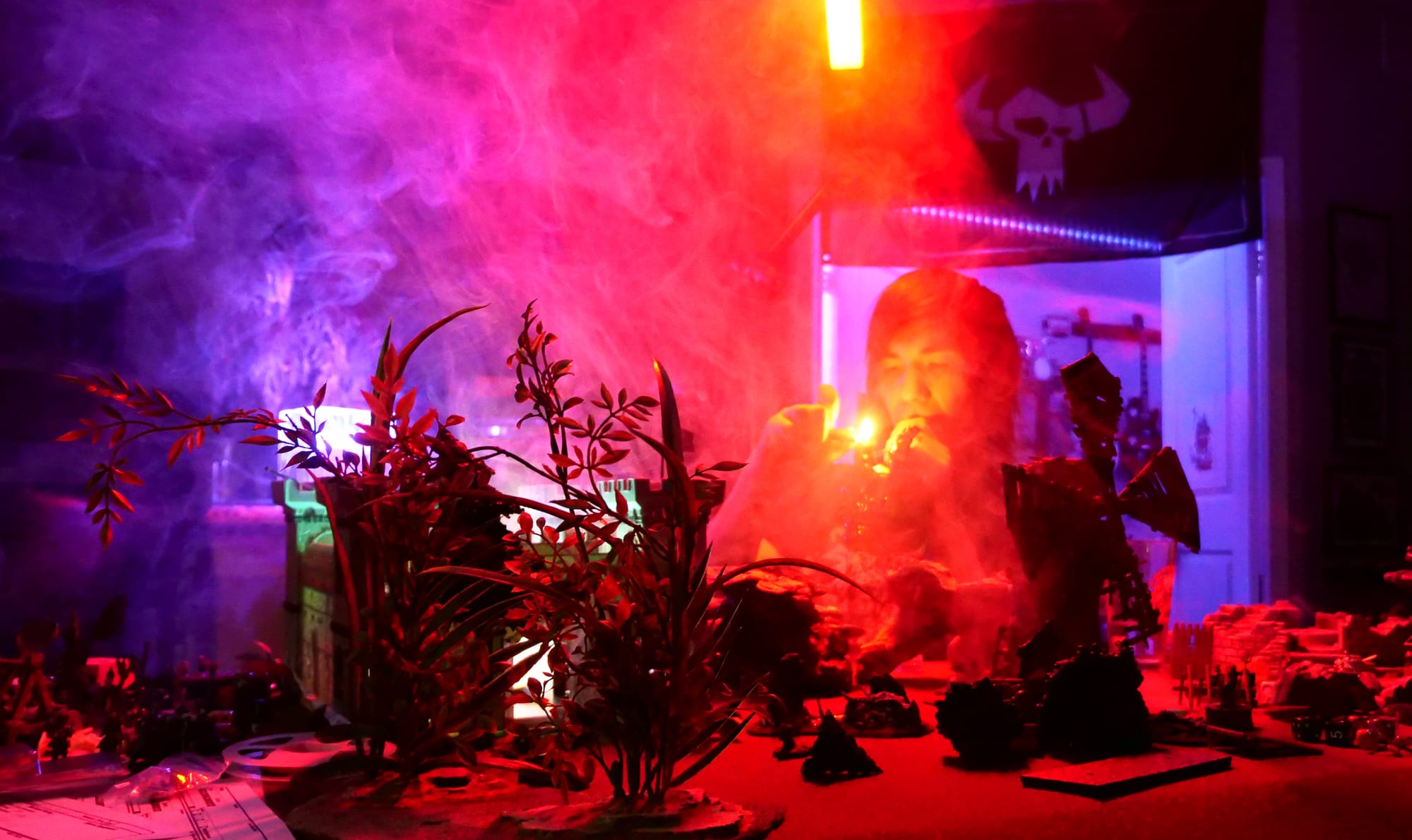
AN INTERVIEW WITH BILLION DOLLAR CLOWN FARM
CJ and Tyler aka Billion Dollar Clown Farm shoot the shit for Glaive: Issue 02. We talk getting into the hobby, Orks, and the best drugs for competitive Warhammer.
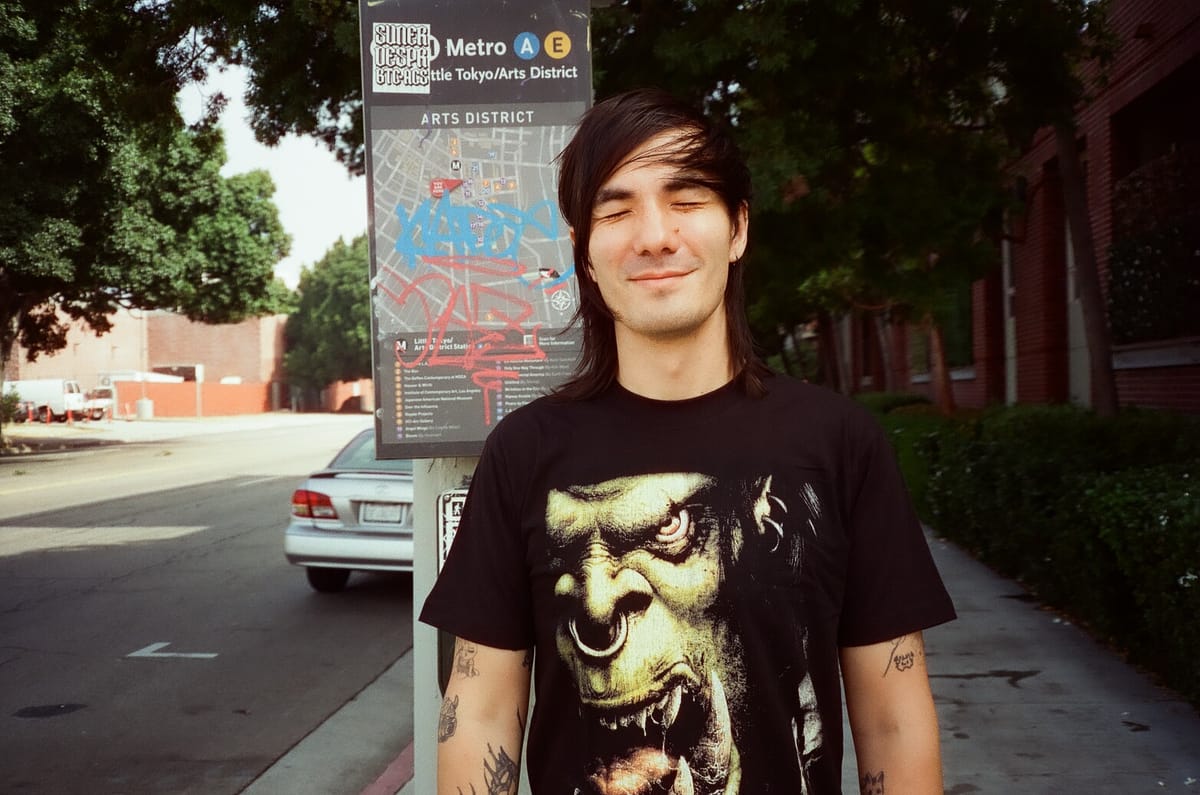
It was the last day of Under the Dice Fest 2025 when Tyler and I finally got a chance to sit down and chat. We'd spent the last couple days in an absolute flurry of creative and competitive madness. I played my first game of Mordheim during this year's New England Mordheim Open. Tyler played a fantastic live show as Bolt Thrower II, complete with an insane accompanying video element that was both hilarious and heart-wrenching. I think we would both agree we were completely spent, so it was a welcome change of pace when we snuck out of the convention hall and made our way over to a run down gazebo in the field behind the parking lot. Tyler and I had connected before UTD Fest and chatted briefly here and there over the past couple of days, but due to the amount of people and the incredibly social environment of the festival, we barely had time to really get to know each other. Finally, the morning of that last day, we had around an hour and a half where we could sit down and really get into the details of his history with gaming, his love of music, and the best competitive intoxicants.
For those who are not aware, Tyler has a YouTube channel called "Billion Dollar Clown Farm" where he posts videos cataloging his miniature painting projects as well as whatever the fuck he feels like. The collection of videos you'll find there are all over the place in the best way and I highly recommend getting lost in the little world he's built. You'll find out in this interview, however, that it would be a disservice to call Tyler a "youtuber". There is so much more going on and it was an absolute pleasure to chat with him and document it for you guys. Enjoy!
CJ: Ok, to start, let me know how you got into wargaming.
Tyler: I was like 9 or 10. There was a Games Workshop in the Natick Mall in Massachusetts that my mom thought was a GameStop. I think this probably happened a lot, it can't be just my mom. She was like "oh, look, Tyler, a game store." And then we went in and, uh, yeah. It was not a GameStop.
I'm trying to remember my interests at the time. I feel like Warhammer has just defined everything I like so much. I don't even remember what I liked before Warhammer. But I liked things that must have been pretty similar.
Like I knew what a goblin was and got very excited to see them in there, but I don't even remember what my cultural reference point for that was prior. But yeah, we went in and there was a guy doing like demo games, as all the Games Workshops did. It was me and another kid. We had to roll off. I wanted to do a Warhammer Fantasy demo, because I liked fantasy stuff. Did not care about sci-fi at all. Didn't ever really like Star Wars or anything. Then there's another kid who really wanted to play 40K 'cause he was a sci-fi guy. I lost the roll off. So we played a 40K demo instead because there's just one employee and you'll only get time for one of 'em. And then I was like, this game seems okay. Yeah. I guess Necrons are all right. I'll do that.
I saw Grotz. I was like, these are the coolest ones here. I want a lot of these. And then like, yeah, you get an army book and you see that they are like 3 points and that you need 1500 to 2000 of those points to allegedly play a game. You're like, that's not gonna happen in my lifetime as a child.
CJ: Oh, for sure.
Tyler: Yeah. It's a lot of Grotz needed. So then I sort of just bounced around playing different armies or trying to with birthday money and like whatever else over the course of a few years. Eventually I was like, Orks are the ones I actually care about a lot. And then yeah. Still identify with them the most.
CJ: So when you went into the Games Workshop, you were just kind of automatically on board with what was happening?
Tyler: Yeah. I was like, this seems cool.
CJ: Moving little guys around and shit.
Tyler: Well, actually, I'm remembering some cultural reference points now. I liked Magic prior. I think it was goblins from Magic that really got me into stuff like that. I had played Warlords Battlecry. It was like an RTS from the 90s, Early 2000s. I think I might've played like Warcraft 3 by that point too. Or Warcraft? No. Warcraft 3 must've been later. Like Warcraft 2 or something. Oh, I think maybe like Mage Knight might've come out when I was like 8. I think I had some of those and knew what a goblin was from that.

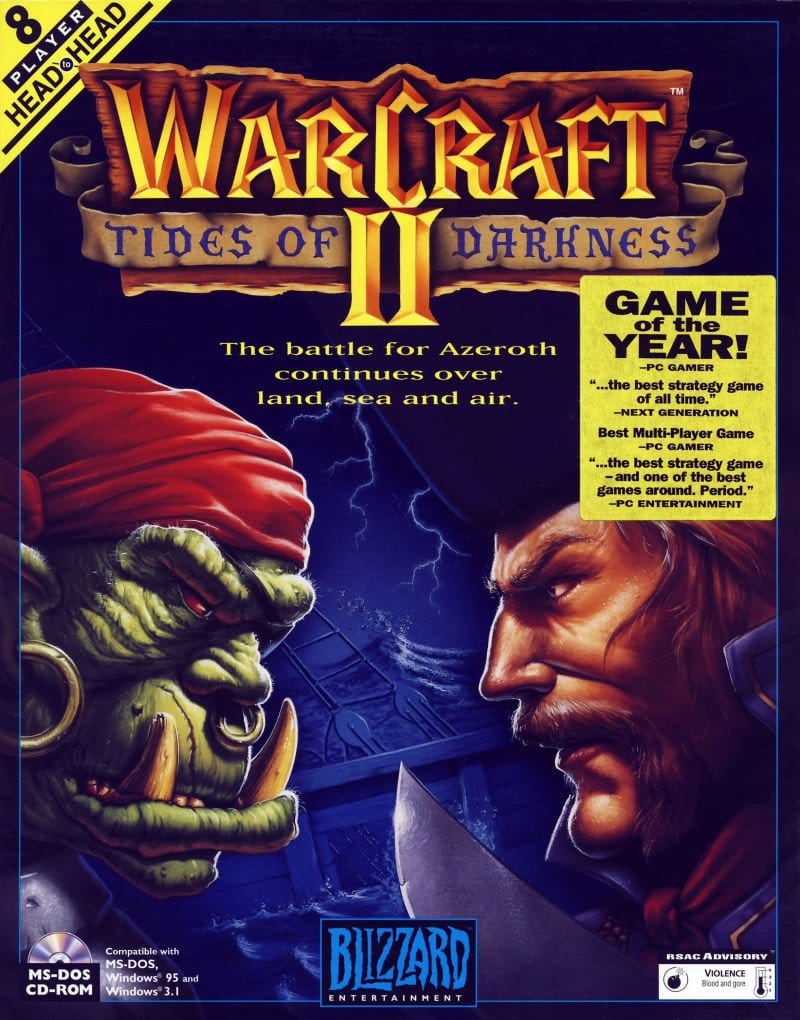
Tyler: And then, yeah, because of those cultural reference points though, I was just like "oh, this is like Magic, but you paint them and they're toys." And like, that's so cool. And I think the game's lost a lot in terms of the core principles of what they're pushing as the narrative of getting the players into it. Not the narrative of the universe, but from a player perspective. They really used to push that. Like, these are your guys and you can kind of do whatever you want. Especially like Orks as a faction at the time. The encouragement of using vehicles from other factions, but also from like historical kits and stuff. It was really exciting to me.
I feel like Games Workshop obviously doesn't do that, pushing like the IP of other companies. But I feel like they don't even do it within their own IPs and they make them war against each other too, which is really weird.
CJ: Yeah. It kind of has this parallel with Magic where... It makes more sense in Magic where you need to have the actual card. You know, proxy culture's becoming more of a thing, but it's just crazy to think that people would be so adamant about proxying in a wargame, you know?
Tyler: I wouldn't even call that kind of stuff proxies.
CJ: Right.
Tyler: I feel like proxy's become kind of a dirty word too.
CJ: Right. But that is the thing though, right? Where people are like, you need to have official models or else I feel like you're not...
Tyler: Yeah, I mean, at some point they used to just be called conversions and then the word proxy kind of got thrown in. Which I feel like is something that's been really bad culturally.
CJ: It's like a dirty word across all of it. With Magic, all of it. It's weird.
Tyler: Yeah. I think it's fine for proxy to be a dirty word. I just think we should call the things that we call proxies a different thing.
CJ: For sure.
Tyler: A proxy used to be: there's a Space Marine holding a bolter, but in the game he's actually holding a Lascannon. And now it just means like, this is not the official Games Workshop model. To a lot of people at least. And I think that's like strange. I don't know where that came from. Probably like, I don't know, some YouTube or blog post or something from like 10 years ago.
CJ: So did you get right into the competitive side of the hobby?
Tyler: Oh, boy! We're talking about that now. Yeah. Um, I don't know. I don't think so. I mean, no child gets into Warhammer for the, to my understanding, abstract math and like, desire to win. But the game inherently encourages you to win a game. Which I think is something you could probably not have in Warhammer and would be fine. Or like reframe what a win or a loss is. But if a game system tells you, you should in some capacity strive to win this game, but everything about the rest of it contradicts that, it's kind of weird too. I felt like for me, it was less "I really want to be a competitive gamer" and learn what a tournament was but more just the infrastructure that was around.
CJ: Right, right.
Tyler: I started playing the game with some friends that all mostly stopped kind of quickly, as often happens I think with a lot of people. It's like, if you're six middle school friends and two of them keep playing and the rest just kind of adopt other interests and, you know, high school happens and stuff. But yeah, in like elementary and middle school I just kept playing while my friends left. And the main place to play was at local leagues and like RTTs. It didn't start with me being like "I really want to go to LVO" which didn't exist for another 10 years. It was "I really like playing at my local game store. They're having a tournament Saturday and everyone's gonna have cool armies there and we're going to play games against each other." And if you just play a game a lot I feel like you probably, at least a lot of people, want to understand it and get good at it to some capacity.
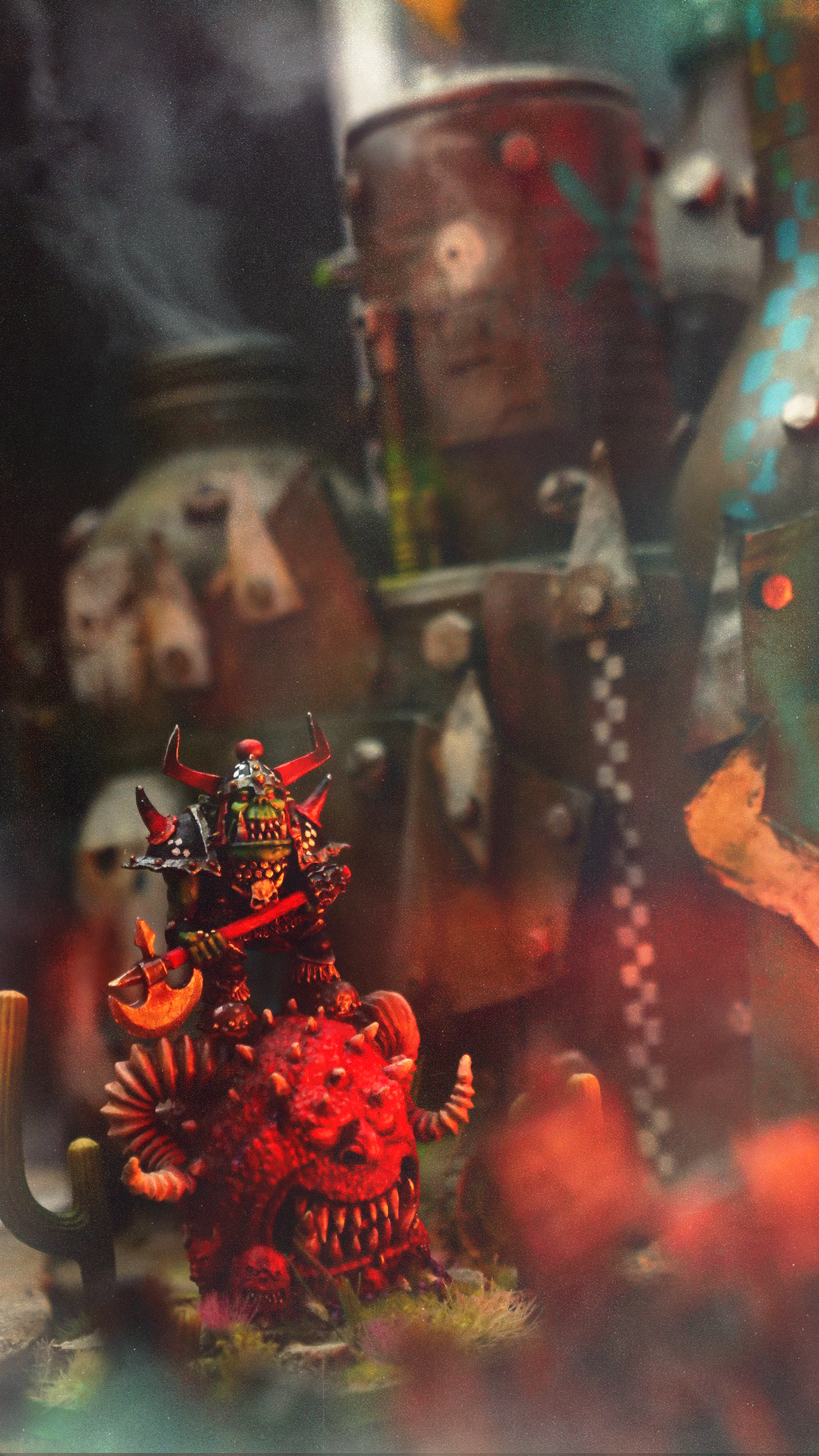
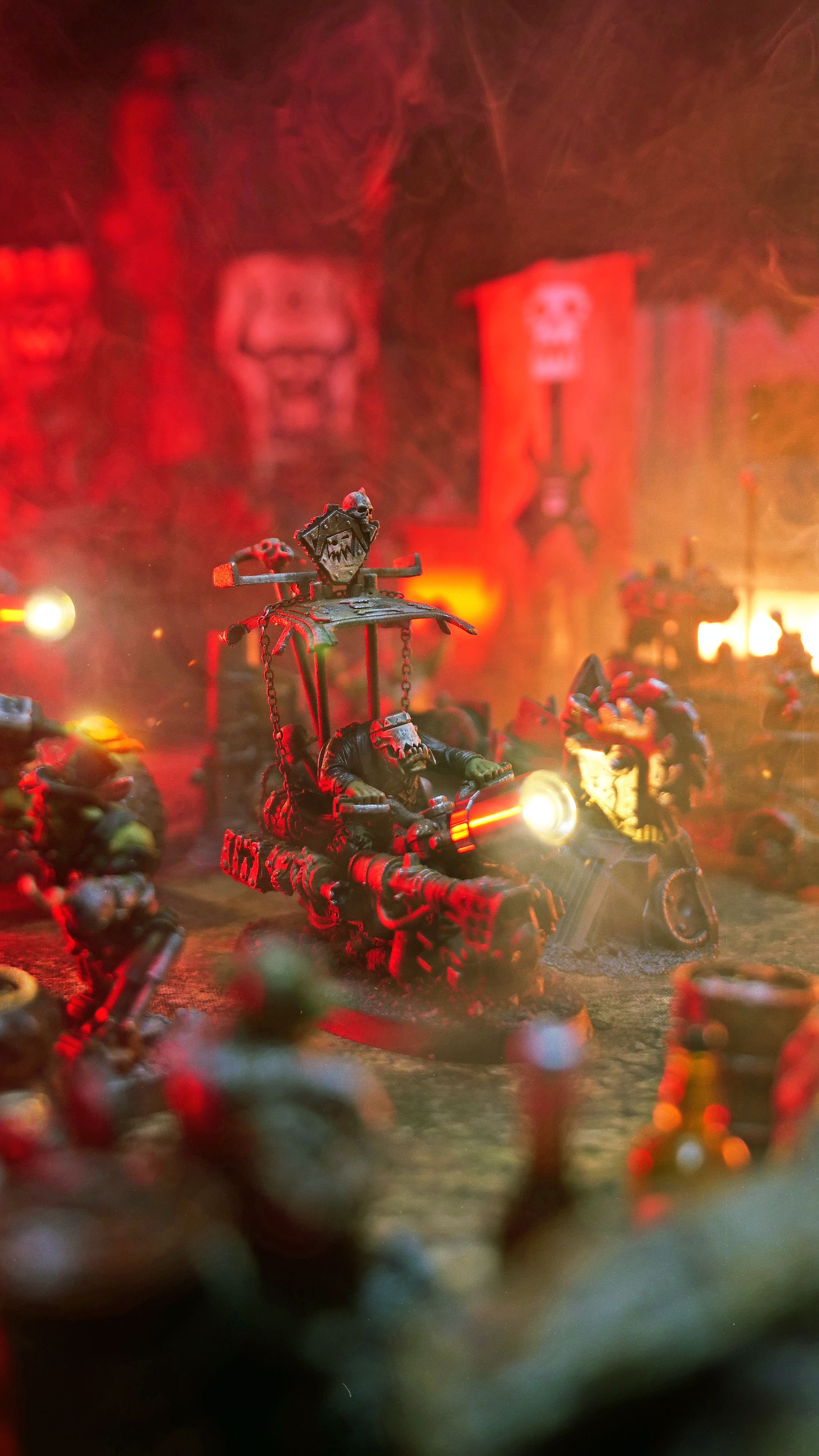
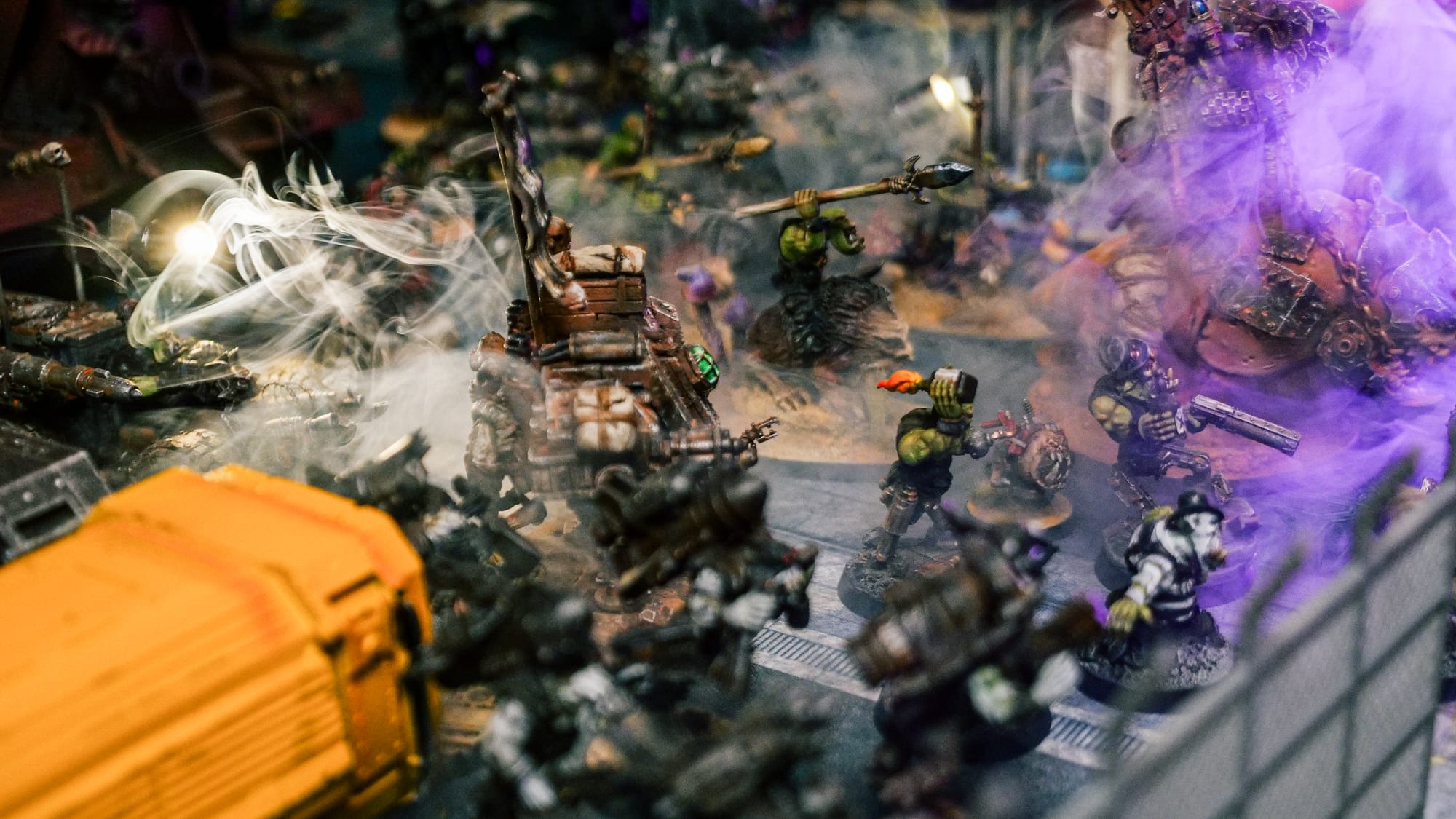
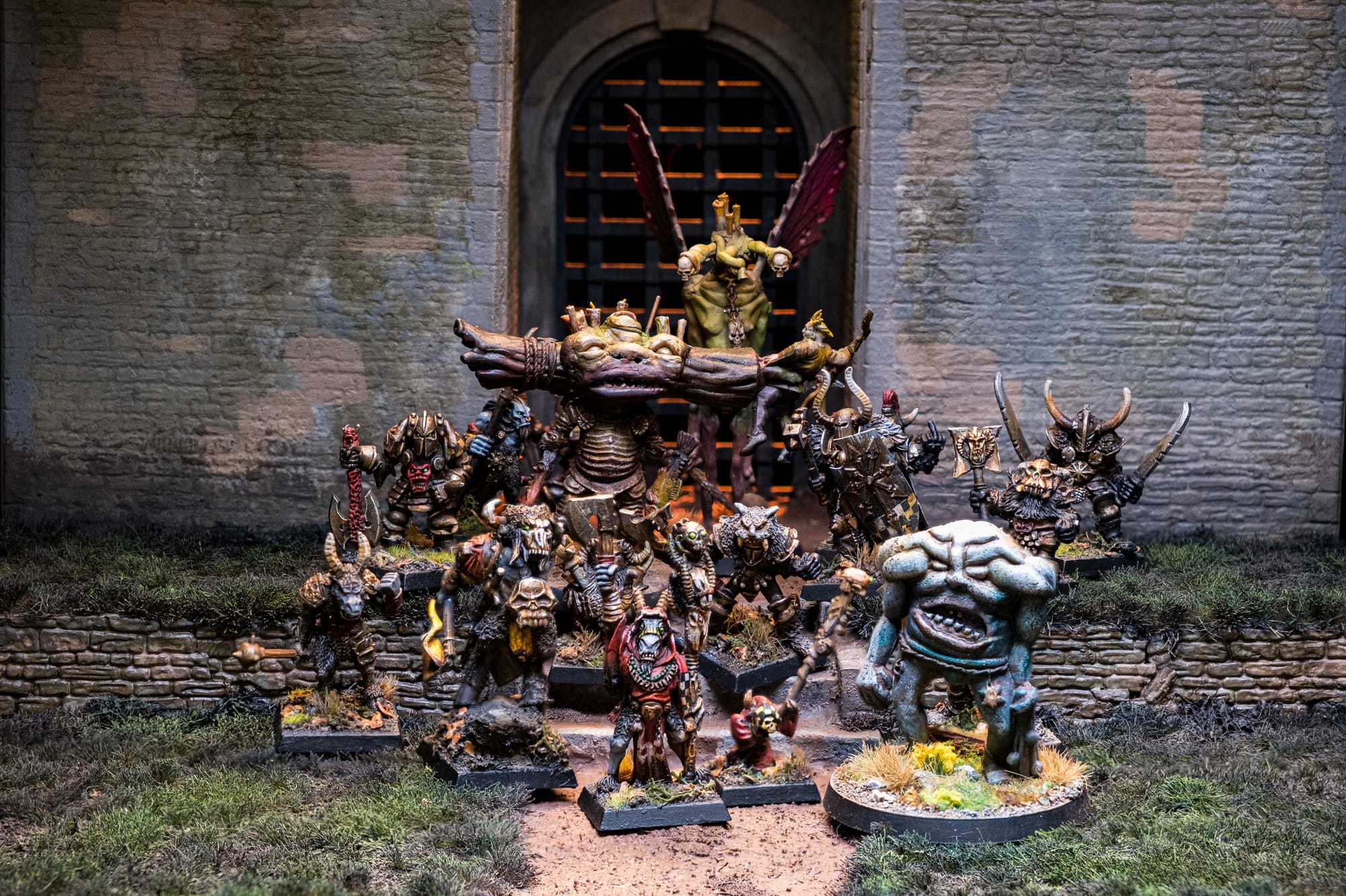
Photos by Billion Dollar Clown Farm
CJ: Especially when the environment is fostering that.
Tyler: Yeah, the environment and the rule system itself encourage you to do that. I feel like that's something that's always been weird about Warhammer. It's a game that I think having a winner and a loser only made sense in the context of the times when the culture of games was a lot different. It was a pre-internet era where it was really hard to learn information. It was really hard to know statistics on stuff. There was no baseline for a faction win rate outside of like 20 people in your town probably, and being like, "this guy sucks with T'au, it must be bad." But yeah, I think it's very easy to, not completely solve, but understand a lot of values of the game and just have like spreadsheets and stuff. That's what the culture of competitive 40K is all about now, which I think is a big mistake.
CJ: It's kinda like with Magic too where it feels like early on when it was first coming out, you were experimenting with your deck to see what is cool and interesting. You didn't have the internet to be like "here is the percentage win rate for this deck using these exact cards this way." You just lose a lot of the excitement of getting into the game. It's like, "okay, if I want to win, I have to buy these cards." Or like with Warhammer, if I wanna win, I have to run this faction with this setup and everything.
Tyler: It's funny that Magic has like a culture of netdecking that's always been kind of fine, but with Warhammer there's something like very taboo about it. Which I don't necessarily even disagree with, it's just interesting.
CJ: Yeah. But Magic also doesn't really imply a narrative the same way you do with minis.
Tyler: Yeah, and I think that's something that Warhammer is now. But it's like fundamentally different than how it used to be. You can't tell me 10th edition is a narrative game. It's trying to be a lot more like Magic than it is trying to be 3rd edition. Culturally, the sensibilities have just shifted. Warhammer currently to me is as abstract of a game as Magic is. It is an abstract numbers game where you are taking units to optimize something that's not the narrative of your army. It's a culture that doesn't really focus on kitbashing or making your things super unique either. It's just basically 3D Magic I think at this point. It's something that feels bad if you're used to it being like D&D with more toys. Which is like, regardless of what the game mechanically used to be, is definitely culturally what it used to be.
But yeah, to answer your question, I played in a lot of RTTs and I was always very bad. I sucked at painting growing up and I also was pretty bad at the game. I don't think I really naturally had a head for either of 'em. But I just felt like I wanted to get good at painting 'cause that was the thing that stuff revolved around the most at that point. It was a real culture of neckbeardy guys and a lot of shame if you had poorly painted models too. Which, for better or worse, made me want to get really good at painting. It was the 18 through 24-year-olds making fun of the 13-year-olds who were bad at painting. I think that's probably just 'cause they had bad lives and wanted to take it out on the only people they probably could. I remember a lot of older weird guys that would make fun of me and my friends painting and I was like, "well, fuck you. I'll get good at painting then." Then, yeah, I got pretty good at painting by the time I was maybe like 14, 13. So not that long after I started playing, but in kid years it feels like a lot. Like 10 to 14 is a long time for a child, even though four years is like nothing to me now.
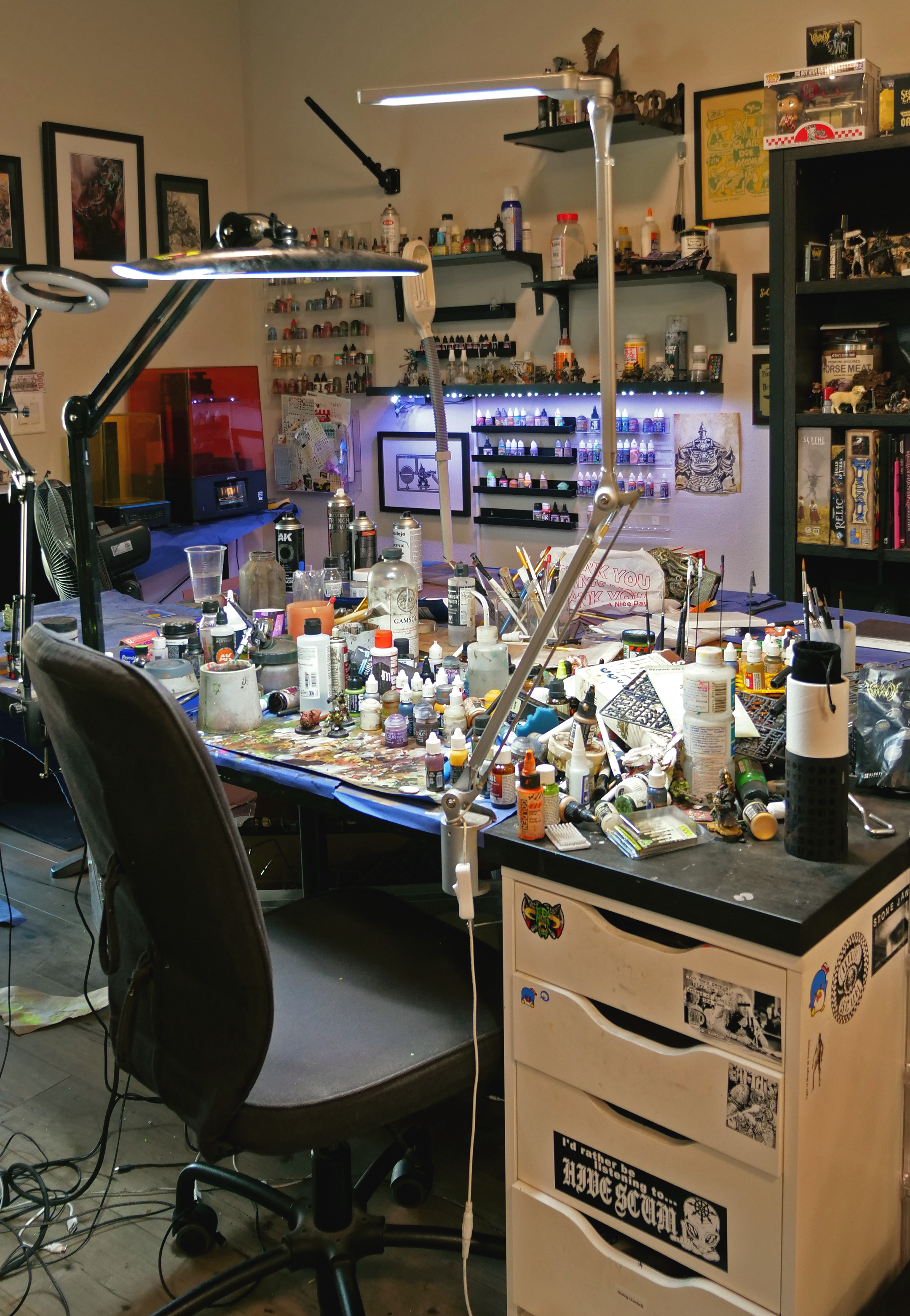
CJ: It's such a large portion of your life as a child.
Tyler: Yeah, and it's also like all I'm doing. All I'm doing is painting Warhammer at that point. Just repainting the same models over and over again if I can't afford the new ones. It's just tons of layers of paint. Not knowing how to paint strip. Just like really thick, but well painted models. I think I had a hard time understanding what made someone good at Warhammer. I feel like I kind of miss that too. There was a magic of not knowing how to solve the game or how to even approach, like, this is strength X versus toughness X and cost X points.
CJ: It's like playing a video game but just watching a walkthrough. Are you really enjoying the process of the game?
So it was the painting that kind of hooked you first?
Tyler: Yeah. I think it was just the models were cool. And that you could make them into whatever you wanted. Painting was a part of it, but I pretty quickly found out about kitbashing and was like, that's also very cool and I like this stuff a lot. I think instead you had an army that represented you as an art piece in a way. It was an expression of yourself in some capacity. That was the exciting part. Both the faction you chose and identified with and also how you painted it and kitbashed.
CJ: Yeah, for sure.
Tyler: And then when I was like 22 or 23 and got back into Warhammer after college I was like, maybe I'll just focus on playing now. I started going to tournaments again and very quickly got more sucked into that side of it. I felt like I'd gotten good enough at painting. I wanted to keep getting better but had done that already. I never really got good at the game though. When I was like 22, 23, I worked as a subcontractor for a lot of motion graphics companies and like film shit.
CJ: Oh, cool.
Tyler: Yeah, and then I would have tons of time off. I'd work like 70 hour weeks for like 3 months and then have like 3 to 4 months of doing nothing. Which I would use all the money I had just gained to fly around the country playing Warhammer basically. I met a lot of people through that and really got into trying to climb the ITC leaderboard. It's the same as wanting to get good at like League of Legends or whatever. There's a ranking system with your name on it and you wanna see your name go up and up and up. This one just costs a lot more and requires a lot more physical space. It's the same part of my brain.
CJ: For sure. So then when did you decide you wanted to start recording shit and putting it on YouTube?
Tyler: Like right before COVID I was doing a lot of concert visuals for bands. I think the last one I did was visuals for one of Maroon Five's tours, which is pretty funny. It was me and some other guy I was friends with that invited me to help do that. And then I was like, "wow, this is going pretty good." I don't love Maroon Five, but making concert visuals is very cool. I really like this scene. And then COVID happened and it was like, oh, there's a lot less shows than there used to be. My bank account is slowly dwindling and also more importantly, it feels like the world might no longer be here within the next two to three years or we just all live inside forever. I'd been kind of wanting to make Warhammer videos for a long time 'cause at that point I felt like I'd sort of explored the tournament scene to a point where I was starting to get a little bored of it. And also there was no tournament scene suddenly because of COVID.
CJ: Right.
Tyler: So I was like, fuck it, I'll just start making videos. If not now, when everyone's locked inside and I have infinite time, then when. I got enough response from the first couple of videos I made that I was pretty happy. People like these and I like these more importantly, and they're fun to make. So I think I'm just gonna give this a real shot and see how it goes. I don't make as many videos now as I used to, but I'd like to again. I think for me now it's mostly the community and scene I've found, like this at Under the Dice Fest. For a while I was making them for myself and I kind of lost the motivation to do that. Because again, like tournament stuff, I feel like I got what I wanted out of making videos and I've kind of done enough. Now I feel like I wanna make it for the people here who are at similar events. It's cool that they have a good response to it and it's like my friends watching it as opposed to just abstract numbers online of views going up or whatever.
CJ: Is that how you got connected to this scene? Through YouTube?
Tyler: Yeah, totally. I met so many people through the YouTube stuff I would never have met otherwise. I would like to meet more. That's my main motivation to do it. It's an easier way to express yourself and summarize yourself as a person or your interests before meeting people at a con because I feel like it's sometimes hard to just organically meet people. This one's easier 'cause it's small. But the huge ones, it's so anonymous.
CJ: These are so curated too. You're not gonna find out about this unless you're into the same shit also. You don't really wander into Under the Dice Fest and not know what's going on.
Tyler: I feel like there's a musical parallel in that most people don't get immediately into black metal. It's like maybe you play Guitar Hero and learn about Megadeth or something. And then you eventually maybe move to Slayer. Then from there, I don't know, Amon Amarth or something. And then you make your way into heavier genres of music. I feel like under the Dice Fest is very, very far down the line. It's probably the equivalent of cassette black metal or something. You probably went to a Games Workshop and then got bored of playing 40K 10th edition and then found a cool kitbash model online, and then that led you down a rabbit hole of eventually liking this.
CJ: Yeah. You YouTubed "kitbash" and saw like a Black Magic Craft video or something.
Tyler: Yeah! I feel like Black Magic Craft is probably like the Slayer or something.
CJ: Yeah, yeah, yeah.
Tyler: Then maybe Trent (@miscast) is like, I don't know, The Faceless or Necrophagist or the Black Dahlia Murder. And then Yeah, I'm like Xasthur or like obscure black metal. You just keep getting further down. And then Hive Scum is probably the heaviest band in this analogy, right?
CJ: For sure! So was music always a part of your creative output growing up, as well?
Tyler: Yeah, totally. In high school I was playing in a lot of metal bands. I was like really torn between going to college for like guitar stuff or art. I had a music teacher that told me not to go to school for music so I was like, "cool, I guess I'll do the other one." But before that I was like very seriously into playing with bands and really wanted to have being in a metal band be my life. Which, uh, yeah, it might've been a bad decision still. I'm like not sure...
CJ: To not have gone into music?
Tyler: Yeah. Maybe it was good we did this instead since I don't really have any regrets. I think it would've been cool, but it's just such a different life trajectory. I can't even imagine it now. But just in the past five years, around when I started the channel, I started making music again. But yeah, music's been a thing I've done forever. Played in a lot of Metallica/Slayer cover bands and stuff like that when I was 14.
CJ: Hell yeah.
Tyler: Yeah. It's always been very interlinked with Warhammer. It's always kind of been the same thing for me. I feel like I have the same emotional response to thinking about Warhammer as I do listening to music sometimes.
CJ: Well, I mean, it's obviously felt in the music that you're playing now.
Tyler: Yeah. I'm glad I can communicate that to people. I feel like metal is just an outlet for people who don't express anger in other parts of their lives. I feel like there's something that happens listening to metal music that makes it a healthy outlet for aggression. It's a safe space to acknowledge those feelings. It's kind of what moshing is. It's simulated violence. You're still getting the release if you have something you want to let out that's pent up that could potentially be violence or something. You can get it out in moshing. Tournament Warhammer is kind of the same.
CJ: Moshing is simulated violence and we're just simulating war with Warhammer. So there's an obvious parallel.
Tyler: Yeah, but here it feels different to me. Because it is simulated warfare and violence, but something about playing a narrative event I feel like I have to turn that part of my brain off actually. Instead, attempt to focus on telling a story. Which is something I struggle with too. It's something I like a lot coming from tournament land, which I feel is very much simulated violence to me. Going to a tournament feels stressful and there's a lot of high pressure decision making you'll have to do, so there's a lot of adrenaline going for me. But also, I think you have to be kind of rude or assert yourself in a way. That's like culturally not a thing here. And I'm glad it's separate, but yeah, I don't have that feeling coming to Under the Dice Fest. But I definitely do at any proper 40K tournament I go to.
CJ: So you were getting into Warhammer through Games Workshop stores and that led to the competitive scene naturally. But when did you realize, "oh, there's this narrative side that's like also really dope"?
Tyler: They've always been kind of interlinked for me. When I was playing tournaments back in the day and even early in what you would call "modern Warhammer" there was always the narrative of "the Orks are fighting something" and that's cool. I feel like not everyone in tournaments think in those terms.
CJ: It's more attractive chess.
Tyler: Yeah, yeah. But I always like that there's still the inherent narrative of "the Orks are fighting something." That's cool to me. Growing up there was like big siege days. I really liked all the early Games Workshop narrative campaigns. I was too young for Armageddon, but like Storm of Chaos and Lustria and like the fantasy ones that came later. The global campaigns were so sick. Even in tournaments I feel like people like telling a story. Even if it's round 5 of LVO or something, it's cool that my marines painted to look like Crimson Fists are fighting your Orks and Ghazghkull and it feels like a cinematic moment still, you know? So I think if you look for it, even if the game doesn't really encourage it directly, you can still find those narrative moments in tournaments. But obviously that didn't feel like enough, which is why I'm here too.
I feel like narrative wargaming is still not as fleshed out to me as it could be or should be. I think to really have a truly narrative experience that feels successful and good to me, you have to eliminate winning and losing as conditions. Like Mordheim, for instance. I think you could have the same win and loss condition of "If a player routes, they lose and the game is over". Just remove "they lose" from that. I think people will approach it differently. I think you could encourage certain narrative moments to happen and have it be collaborative. The versus system feels like an archaic concept from old Warhammer times. When the system was built around being something between Magic and a narrative experience. I like those more separate. I think it's cool as slightly more structured D&D with neat models instead of something that has a defined winner and loser.
CJ: Yeah. I come from the RPG side of the fantasy gaming hobby. In the old school style of role-playing games, everybody always throws around the idea of "emergent storytelling" or "emergent narrative". It's something that you didn't plan on happening, but just kind of reveals itself through playing the game. It feels like the stuff we're doing here with narrative Mordheim is very primed for creating emergent stories.
Tyler: I think one big difference between Mordheim and modern 40K is that in Mordheim you have very little control over what happens. In Mordheim, the spikes of what could happen are crazy. Also, nothing's balanced and the missions don't really make sense in a way that I like. But yeah, there's still that concept of winning and losing. It'd be cool if just, guys died and things happened and fights occurred, but you remove anything that resembles chess from it.
CJ: So why are Orks the best?
Tyler: I mostly like them in the context of 40K 'cause it's a very dark, bad, sad universe where everything is comically bleak, and I feel like Orks are just such a nice contrast to that. They kind of thrive in that environment. They're a little bit scary and mean, but also funny. There's this sort of jester-like quality of just laughing and celebrating and relishing in how bad it is. It's like a paradise to them that's like cool to me. I don't really like it when Orks talk a whole lot. I don't really like it when they resemble humans too much. I've never really liked the kind of strength and honor sort of Warcraft branded tropes of orc stuff. I like it when they're just mean monster guys. That they're able to carve out the perfect little life in the bleakness of 40K was always appealing to me.
CJ: they're like pointing out the bleakness, but laughing at it.
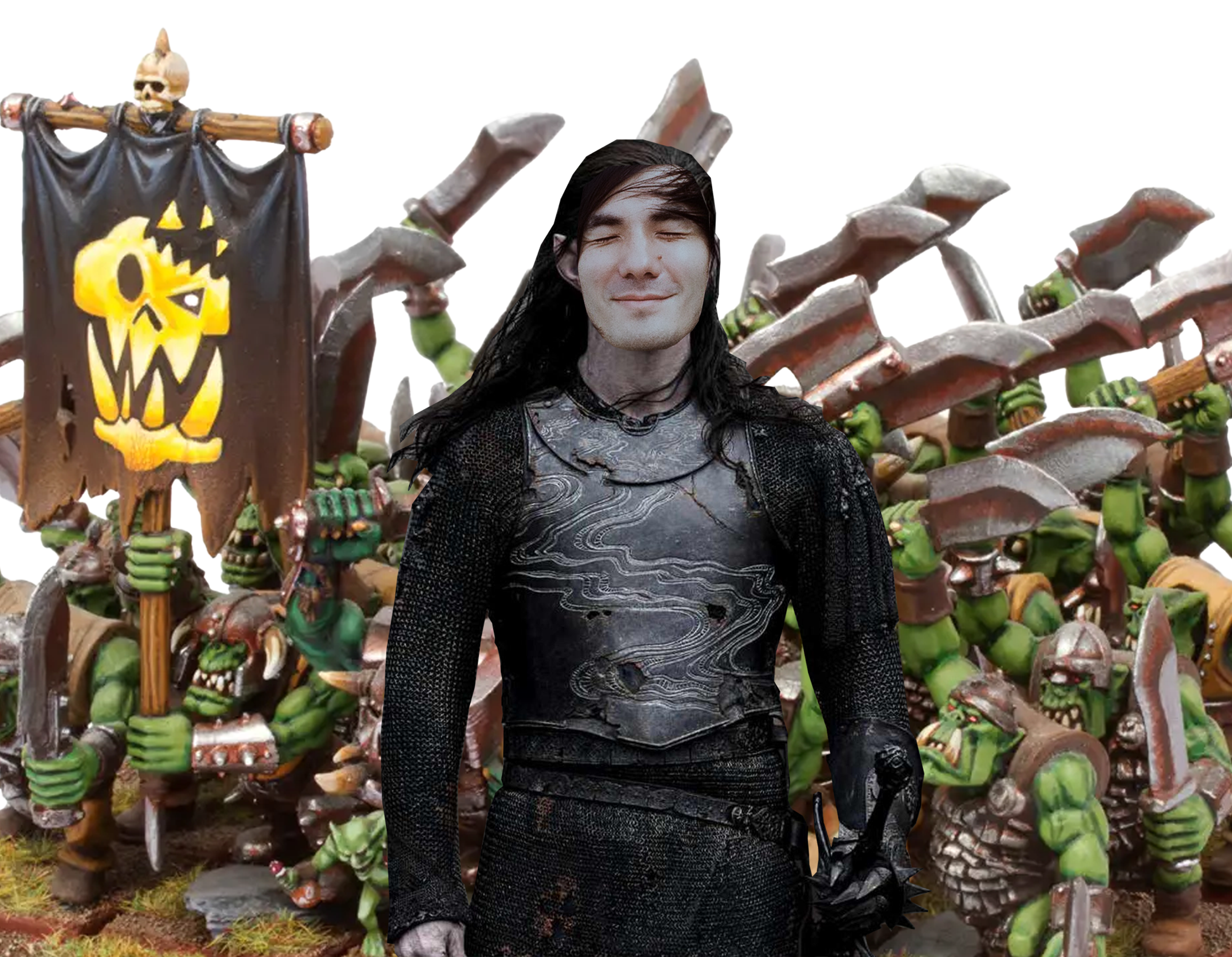
Tyler: I think as a kid I identified with goblins the most because I was a small, skinny little guy. Then as an adult, I sort of identified with Orks more. I don't think I really want to be an Ork though. I think a lot of people want to be a Space Marine. I don't think I'd ever want to be an Ork. Have you seen like The Rings of Power? Oh, it's not a good show. It's very bad, in a way that I like. I like it when TV's kind of bad but tries very hard.
Um, anyways. There's one character in that who is like... the orcs call him father. Where he is just like a spooky looking goth elf. He just looks like a 90s black metal guy. He just has like a full suit of armor. I feel like that's what I would want my relationship to orcs to be. I want them to be my best friends. I don't really want to be one. I don't identify with them directly. There's like a part of them I see in myself but I don't feel like an Ork. I don't want to be like a big muscly green guy. I wanna be like a twink goth elf that gets to be their best friend. We all hang out together.
CJ: Are there any big creative projects that you are dying to make?
Tyler: Yeah. There's one that's been in the back burner for forever. I have so much footage of Warhammer tournaments going back like 10 years at this point. I've just filmed random stuff at tournaments and interviewed people. I think it's in a weird spot where some of the interviews were so long ago that a lot of people who I filmed for them probably would not want them to be public at this point. Even though I think they're tremendously interesting from an artistic perspective. You can make a really compelling movie out of it, but I feel like I'm in a weird spot of not wanting to make those people hate me by doing it either. I don't even know. Someday I might just start editing in chunks and release it online.
Beyond that I really wanna make more music. That's what I care about the most now. I really wanna make more stuff like from the show the other night. Doing that was like super fun. I'm very stoked on trying to make even better ones with more elaborate production and stuff.
It's also been fun selling merch too. Both in that doing all this stuff is very expensive and it's nice to make a little bit of money back, but it's also so sick when I see someone painting trolls that I sculpted or whatever. I think that's like a new way to engage with this stuff that I'm stoked on right now.
I feel like everything's a four to five year cycle for me. Painting was that; tournaments were that; the channel was kind of that, too. Now I feel like I'm at the start of like whatever comes next. Not that any of that stuff is done forever. I just think it's more on the back burner now. Sculpting models is very sick. I get a lot out of that. I wanna go back to traditional sculpting and maybe release some models that I make out of green stuff or whatever. Cast them in metal, all that.
CJ: So then tell me about Space Gitz. How did you get involved with Mike (@crikeymiles)?
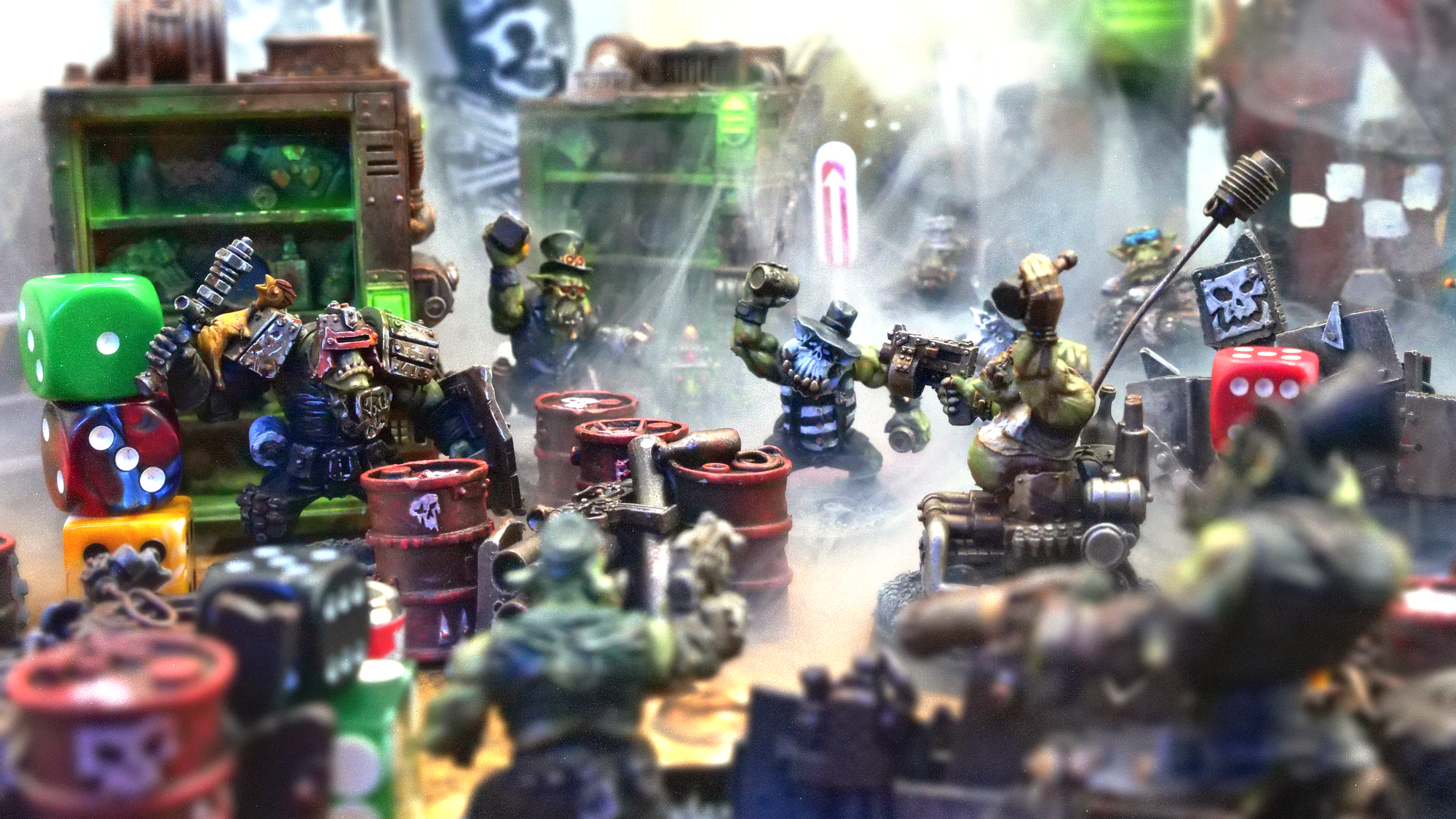
Tyler: Mike just reached out to me and I was like, "oh, holy shit. You're THAT Mike. Yeah, of course I'd like to make a game with you." He did all the rules and stuff. I really just did photography and tried to contribute to the feel of the game and the sensibilities of the universe through the photos and a little bit of the art and stuff. I made some graphics and drawings but it is really mostly just the photography and some name generators and stuff like that. Not like actual rule contributions. A lot of the aesthetic.
But I'd like to do more game development stuff. Either with him or independently where I'm designing rules more. I mean, my day job right now is as a game designer too. I switched out of film at some point after COVID and then got lucky with an opportunity to work at a very young company. It was pretty ramshackle and I had a great time doing that. When it eventually fell apart as all beautiful, scrappy, poorly-planned things do, I got another job a year-ish ago just doing kind of normal game design work for mobile games. I got a lot of experience between those two. It'd be cool to apply some of the stuff I've learned from there to make my own tabletop game. I'd wanna do something without combat or very different. I don't think I'd want to make like OPR 2 or whatever. I'd want it to be very far away from Warhammer in the way it like looks and feels.
CJ: Maybe Mike's rubbing off on you 'cause that's like Space Gitz.
Tyler: Yeah, because Space Gitz was very inspiring too. Space Gitz is a project where I'd always be mad I never got to work on it if I found out about it later. His approach to game design is really innovative and so different from anybody else around him. He's just super good at coming up with ideas that feel completely divorced from their predecessors within the wargaming world.
CJ: Is this is the first tabletop game that you've been involved with at this level or?
Tyler: No, I actually used to work for Fantasy Flight Games. I worked a little bit at a number of different tabletop companies, but only on the art side. I started out during college and right after, working as a miniature sculptor for random companies. A lot of Kickstarter games and stuff like that. Which was cool, but I live in one of the most expensive cities in the country. It was very hard to do that there. I feel like it made it become not fun for me pretty quickly as a result of that, but also I really liked sculpting whenever I could make whatever I wanted. And then just doing it for games I wasn't necessarily attached to made it pretty not fun quickly. I think this is a pretty common experience for commercial artists.
CJ: Yeah.
Tyler: And I was like, well, if I'm not gonna do that, then what? I got into comedy stuff and worked for Adult Swim and some other places like that for a while and like Funny or Die or whatever doing graphic stuff. A lot of editing and some writing and directing.
CJ: Oh, cool.
Tyler: Yeah, I started as a graphics intern at The Onion in like 2014. Met some people there I'm still really good friends with today. Then kind of made it my goal to do Adult Swim stuff for a while, but that company really doesn't exist in the way it used to anymore either. Just like how Warhammer might die and no longer be the thing that you remember it being, you can still find what you liked about Warhammer in other games. Adult Swim might make stuff you hate that feels like they're trying to be a confused sort of pseudo-Netflix platform that's just making like big budget animation and doesn't make Xavier: Renegade Angel or like deep cut, esoteric stuff anymore. But you can find those sensibilities elsewhere. People are making cool stuff on Instagram and YouTube or whatever now and yeah, the world just works differently. So even if the thing you were attached to becomes something you don't like anymore, you just have to make those sensibilities happen elsewhere in the world.
CJ: You gotta crate dig. Feels like that's now the world we live in, whether it's on YouTube or Instagram or whatever.
So do you have a favorite model that you've ever put together?
Tyler: It has to be that plastic Ork Boyz kit. The one that's been around forever. Since like the early 2000s. It's still my favorite kit to build, probably. I just liked it when models were just a body, some legs, and two arms. And you could just clip them off the sprue in a big pile and make whatever you wanted out of them.
A few years ago I realized I hated, or thought I hated, building models. I think what I actually realized is I hate building modern Games Workshop models. It feels like someone took a model and then just snapped them apart into inconvenient pieces that are hard to put back together. The old models are cool because you could just build them like Legos however you wanted. And it was very intuitive for how stuff fit together.
Now it feels like you're just buying a cool sculpture but someone broke it and you have to fix it before you can do anything with it. Back then it felt like you were making something and I think the Ork Boyz kit and other kits from that era perfectly reflect that. But there's companies, like all the Frostgrave models are sick. Other people who still make models that way.
CJ: Like Oathmark.
Tyler: Yeah, exactly. You can still just buy Oathmark dwarves, cut 'em up in a big pile and just kitbash whatever. So I'm glad other people are doing that stuff.
CJ: Yeah, for sure.
Any crazy event/tournament stories?
Tyler: Uh, yeah, I mean, there's a lot! I'm trying to think of one that would be fun to share... I don't want people to just think I'm the mushroom guy either because I already had a video with mushrooms... It's like not actually something I do that often, but I guess often enough that I have multiple mushroom stories related to wargaming...
I have a really good memory of driving down to San Diego with two of my friends and we took a lot of mushrooms 'cause they'd never tried it before. And then watched Lord of the Rings in the hotel room, which sounds very lame on paper, but was an incredible emotionally transcendent experience for me. As someone who's been to Joshua Tree and done that, watching Lord of the Rings as we all got our Warhammer armies ready in the hotel room was much more powerful than like any shamanistic ayahuasca stuff I've seen. The next morning we were all still definitely feeling it a bit. I played the first couple rounds in that head space and it was very funny just seeing everybody's emotional reactions to the modern Warhammer tournament we had signed up for. I think that was a real point of realization for all of this. What are we doing here? And what do we want out of it? Because the night before, getting ready and thinking about the game was so sick and then actually playing; it felt like something was missing.
Mushrooms are a very bad competitive drug. I would definitely do a competitive drug tier-list video and mushrooms would be on the bottom. You should not play a competitive game on mushrooms. It is the worst possible mindset to be in.
You and a stranger are trying to destroy each other.
CJ: You definitely need coke.
Tyler: Yeah, a lot of caffeine and cocaine. Alcohol is good too, cause it encourages bold risk-taking in a way that I think is often rewarded in Warhammer. Alcohol would probably be the highest for me personally.
CJ: So alcohol is S-tier.
Tyler: Yeah, alcohol has to be the staple. Alcohol is like a really solid space marine build and then cocaine is like some insane esoteric demon build that might backfire terribly. Alcohol I think is just good at making you relax while playing in a tournament setting. It's very stressful too. I can see cocaine backfiring or like too much caffeine where you just go crazy and have a panic attack. A lot of my friends smoke weed and play, but that's crazy to me.
Whenever I go to a tournament and smoke weed, I'm just like, "what are we doing here? Do you want to just rearrange the board to look like a castle and we'll play a siege game instead? And just call it a draw?"